



 切换语言
切换语言
切换语言
切换语言
Choosing a dental chair is not only a product decision. It is also a supplier decision. The manufacturer influences the chair’s design logic, component integration, production consistency, customization options, delivery process and the support available after installation. For clinics, distributors and importers, the right manufacturer can reduce operational friction throughout the life of the equipment.
A practical starting point is to define the real purchasing requirement: the type of dental clinic, treatment workflow, preferred configuration, expected order volume, target market, service expectations and budget range. Once those factors are clear, a manufacturer can be evaluated on evidence rather than on appearance or price alone.
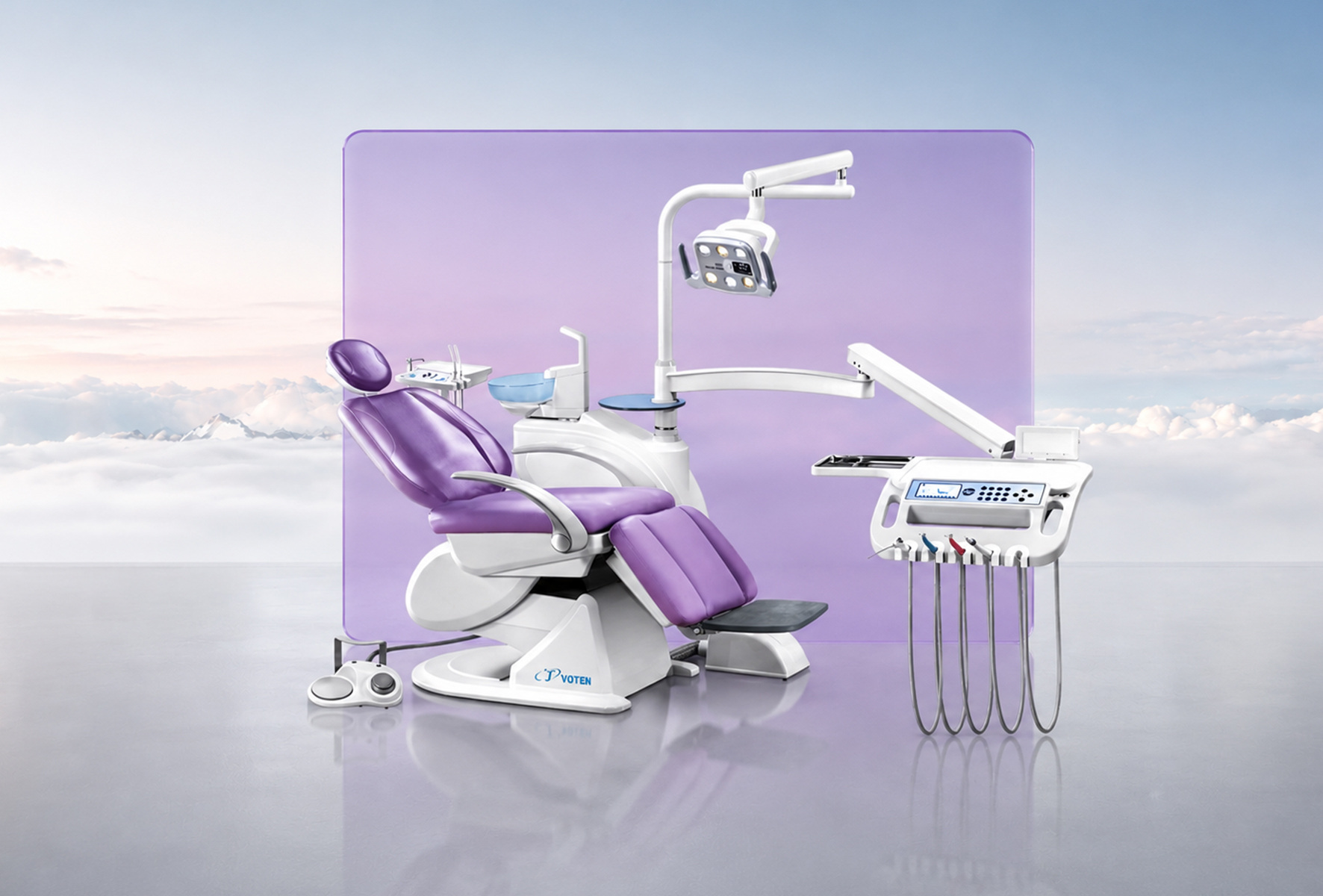
Dental treatment unit in a moder clinical environment.
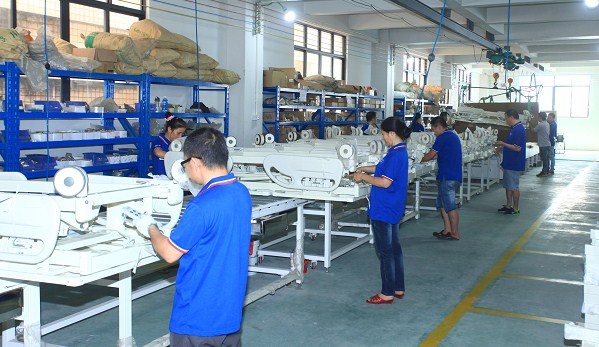
Dental equipment manufacturing environment supports product consistency and configuration control.
A manufacturer should understand the dental environment rather than simply assemble a generic medical product. Dental chairs sit at the center of the treatment area and interact with the dentist, assistant, patient, instrument delivery system, operating light, suction, foot control and other equipment. A manufacturer with a clear dental equipment focus is better positioned to design these elements as one clinical workflow.
For Yiyuan Medical, the dental chair is the core product direction within a broader oral healthcare equipment strategy. This positioning allows the company to develop around the treatment unit while also considering the supporting equipment used in modern dental practices.
A strong dental chair portfolio should have a logical product structure. Buyers should be able to understand which models are intended for general dentistry, which are more feature-oriented, which are designed for specific clinic environments and which options are available for different market requirements.
Good product architecture also makes it easier for distributors to present a product range. Instead of managing a collection of unrelated models, a distributor can build a clearer portfolio around price level, workflow, configuration and target clinic type.
One of the most important questions for an overseas buyer is whether the supplier actually controls the manufacturing process. A manufacturer should be able to explain where key processes take place, how assembly is managed, how product changes are controlled and how quality is checked before shipment.
For buyers evaluating a dental chair factory in China, a factory visit, live production video, production photographs, sample inspection and a clear explanation of quality control are often more useful than a long list of marketing claims.
Dental equipment requirements are not identical in every country. Buyers may need different power specifications, operating light configurations, instrument delivery layouts, chair upholstery choices, control systems, accessories or packaging requirements. A capable manufacturer should have a defined way to confirm these requirements before production.
Customization should not mean uncontrolled one-off manufacturing. The better approach is controlled customization: agreed options, documented specifications, sample approval when needed and a clear record that production follows the approved configuration.
A dental chair is an integrated product. Quality is affected by mechanical structure, electrical components, control systems, upholstery, tubing, plastics, metal parts and final assembly. A final appearance check alone is not enough.
Buyers should ask how components are inspected, how assemblies are tested, how finished units are checked and how non-conforming products are handled. The goal is not to eliminate every risk, which is unrealistic, but to show that the manufacturer uses a repeatable process to control variation.
For international purchasing, communication is part of supplier quality. A professional manufacturer should be able to provide clear quotations, configuration confirmations, product specifications, manuals, packing information and shipping-related documents as appropriate for the project.
This becomes especially important when a distributor is purchasing multiple models. Clear documentation helps prevent configuration errors and makes it easier to train sales teams, service teams and end users.
A dental chair is a working piece of clinical equipment, so the supplier relationship should not end when the container leaves the factory. Buyers should understand what technical information, spare-parts support, troubleshooting guidance and product communication are available after delivery.
Price is easy to compare. Total supplier value is not. A useful comparison matrix should include product consistency, configuration flexibility, quality process, documentation, lead-time reliability, technical communication, packaging, after-sales support and the manufacturer’s ability to develop products with you over time.
· Product fit: Does the model range match your target clinics and market positioning?
· Manufacturing control: Can the supplier explain and demonstrate its production process?
· Customization: Can required options be controlled and reproduced consistently?
· Quality: Is there a repeatable inspection and testing process?
· Communication: Are specifications and project details documented clearly?
· Support: Can the supplier provide usable technical and spare-parts information?
Foshan Yiyuan Medical Technology Co., Ltd. is a dental equipment manufacturer in Foshan, China. The company’s current product strategy places dental chairs at the center of its oral healthcare equipment portfolio. For international buyers, this means the conversation can start with the treatment unit itself and extend to the equipment ecosystem around it.
Yiyuan Medical is positioned for buyers who need a manufacturing partner rather than a simple product listing. The practical value is in understanding the application, confirming the configuration, manufacturing the equipment to the agreed specification and maintaining clear communication throughout the project.
There is no single factor for every project. In most cases, buyers should look first at product fit, manufacturing capability, quality control, configuration consistency and supplier support. A low purchase price is not useful if the product does not match the clinic workflow or if repeat orders are difficult to reproduce.
Yes, China has a large medical and equipment manufacturing base. The right supplier still needs to be evaluated individually, especially for product quality, documentation, communication, production control and the buyer’s target-market requirements.
Many manufacturers can offer controlled configuration options. Buyers should confirm exactly which components and functions can be customized, how specifications are approved and how the final configuration is recorded before mass production.
A useful pre-order package can include the model specification, configuration list, quotation, product photographs or video, technical documentation, packaging information, lead-time expectations and a clearly defined quality and inspection arrangement.
The best dental chair manufacturer is not necessarily the one with the lowest quotation or the largest catalog. It is the supplier that can consistently turn your clinical and commercial requirements into a reliable product configuration, a controlled manufacturing process and a sustainable supply relationship. For clinics, distributors and importers, that is the real foundation of a successful dental equipment purchase.