



 切换语言
切换语言
切换语言
切换语言
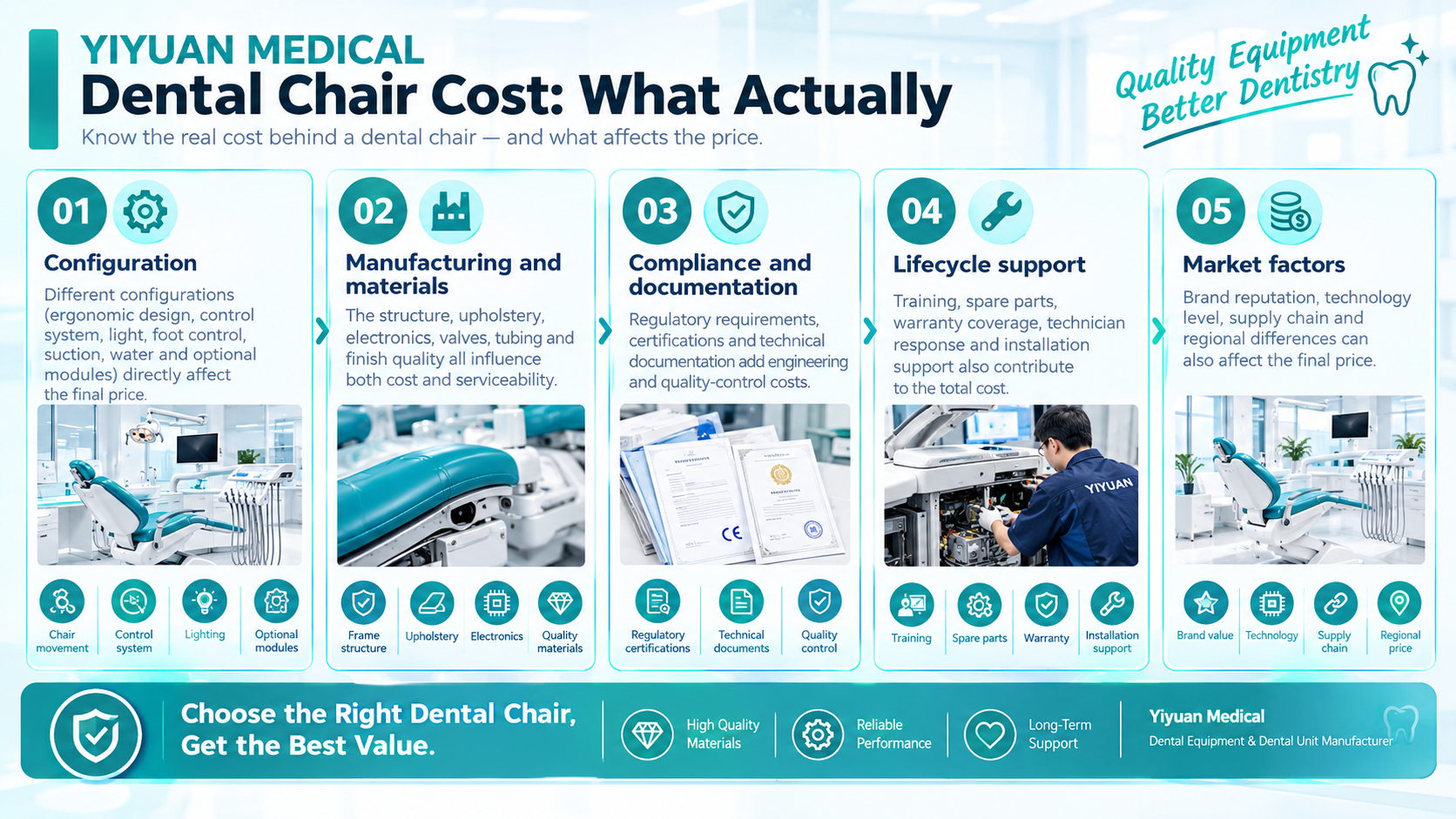
There is no universal “correct price” for a dental chair because a dental unit is a configurable clinical system. Two products may both be called dental chairs while differing in motion systems, integrated instruments, operating lights, utilities, electronics, documentation and after-sales support. A useful buyer compares total value and risk rather than a single line-item price.
Request a detailed configuration sheet. A quote should identify the chair, delivery system, operating light, foot control, instruments, suction, water system, optional modules, installation items and shipping terms. Without this detail, a lower quote may simply exclude components that appear in a higher quote.
The equipment price may not include electrical work, air/water piping, suction, drainage, cabinetry modifications or contractor labor. Obtain a room-readiness list early so these costs can be separated from the equipment quotation.
ISO 7494-1:2018 provides a recognized international framework for stationary dental units and patient chairs. In the U.S., FDA lists dental chairs under regulation 872.6250 as Class I devices. These references are context, not a blanket approval statement for any specific model. Buyers should ask for the documentation applicable to their destination market.
A chair that is slightly more expensive at purchase may have a different service profile from a lower-cost model. Compare warranty, maintenance requirements, service intervals, replacement parts, technical support and training. A simple annualized estimate can reveal the operational impact of downtime and service delays.
Use columns for configuration, unit price, shipping, installation, room preparation, spare parts, warranty, training and expected maintenance. This turns a product comparison into a business decision record that can be shared with clinic owners and finance teams.
What affects the price of a dental chair?
Configuration, materials, electronics, delivery system, light, accessories, compliance/documentation, installation and lifecycle support all contribute.
How can buyers compare quotes fairly?
Request identical configuration details and separate equipment, shipping, installation, room preparation, warranty and service items.
Evidence & source note
|
Organization / evidence |
Original source address |
|
International Organization for Standardization (ISO) |
|
|
U.S. FDA |
https://www.accessdata.fda.gov/scripts/cdrh/cfdocs/cfPCD/classification.cfm?ID=KLC |