



 切换语言
切换语言
切换语言
切换语言
A modern dental chair is the central operating platform of a dental treatment room. It connects patient positioning, dentist posture, assistant workflow, instrument delivery, lighting, controls and supporting equipment. Because so many activities depend on it, the design of the chair can influence how smoothly the entire treatment area works.
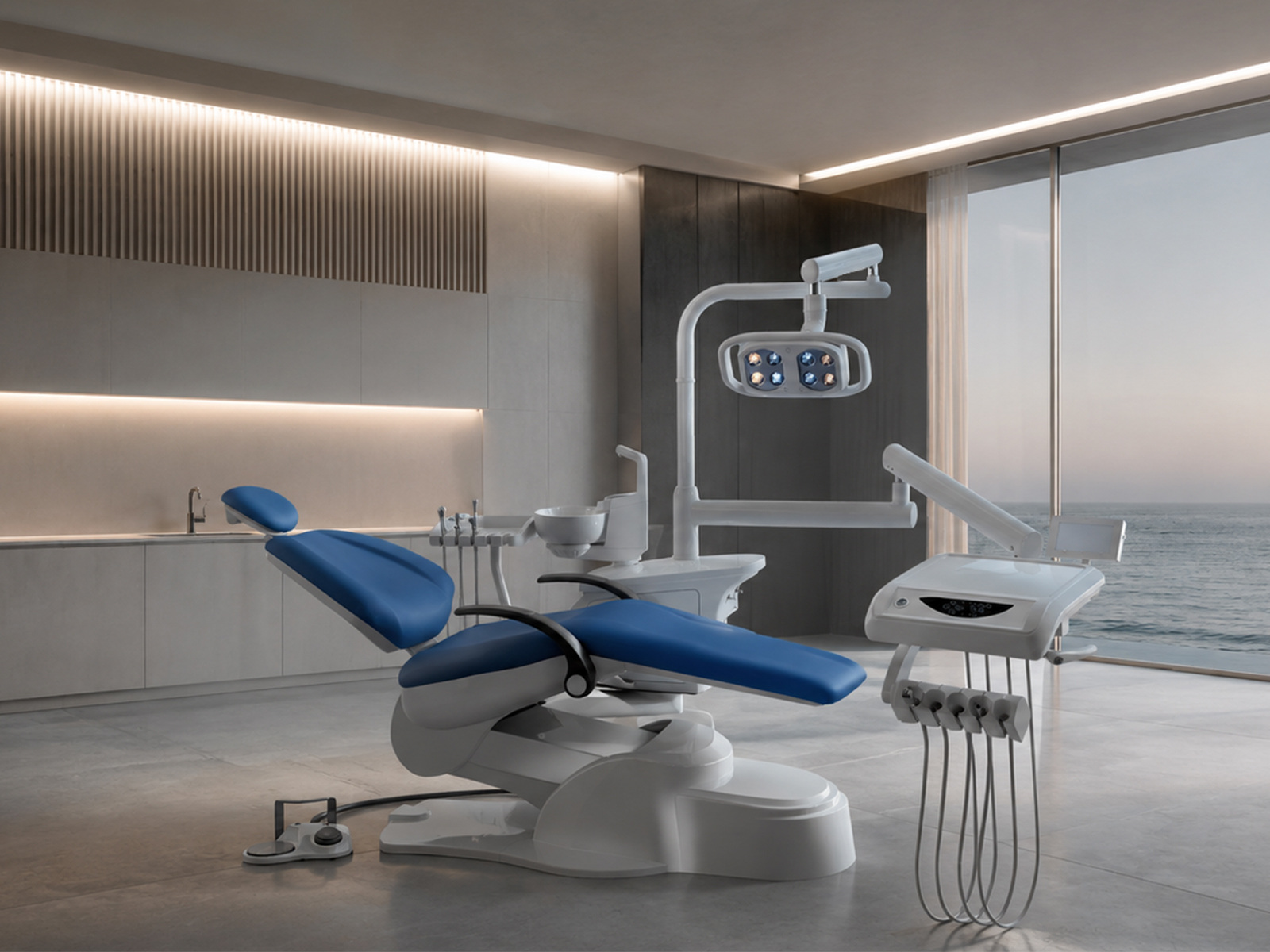
Modern dental chair design integrates patient positioning, operator access and equipment delivery.
For that reason, buyers should evaluate a dental unit as a workflow system rather than as a list of isolated specifications. A feature is valuable when it makes treatment easier, safer, more comfortable or more consistent for the people using the equipment.
The first requirement of a modern dental chair is controlled positioning. Dentists work from different angles, and patients require different treatment positions. A suitable chair should support smooth movement and stable positioning so the clinical team can adjust the working environment without unnecessary interruption.
Ergonomics should also be considered from the operator’s perspective. The layout of the chair, instrument delivery and controls should support natural hand movement and reduce avoidable reaching, twisting or obstruction during treatment.
The delivery system is one of the most visible differences between a basic chair and a thoughtfully designed dental unit. Instruments should be arranged so that the dentist and assistant can access them predictably while maintaining enough space for treatment.
Depending on the model, a unit may include multiple instrument positions, handpieces, air and water functions, suction, a control panel and other accessories. The best configuration is not the one with the most features. It is the one that matches the clinic’s real operating habits.
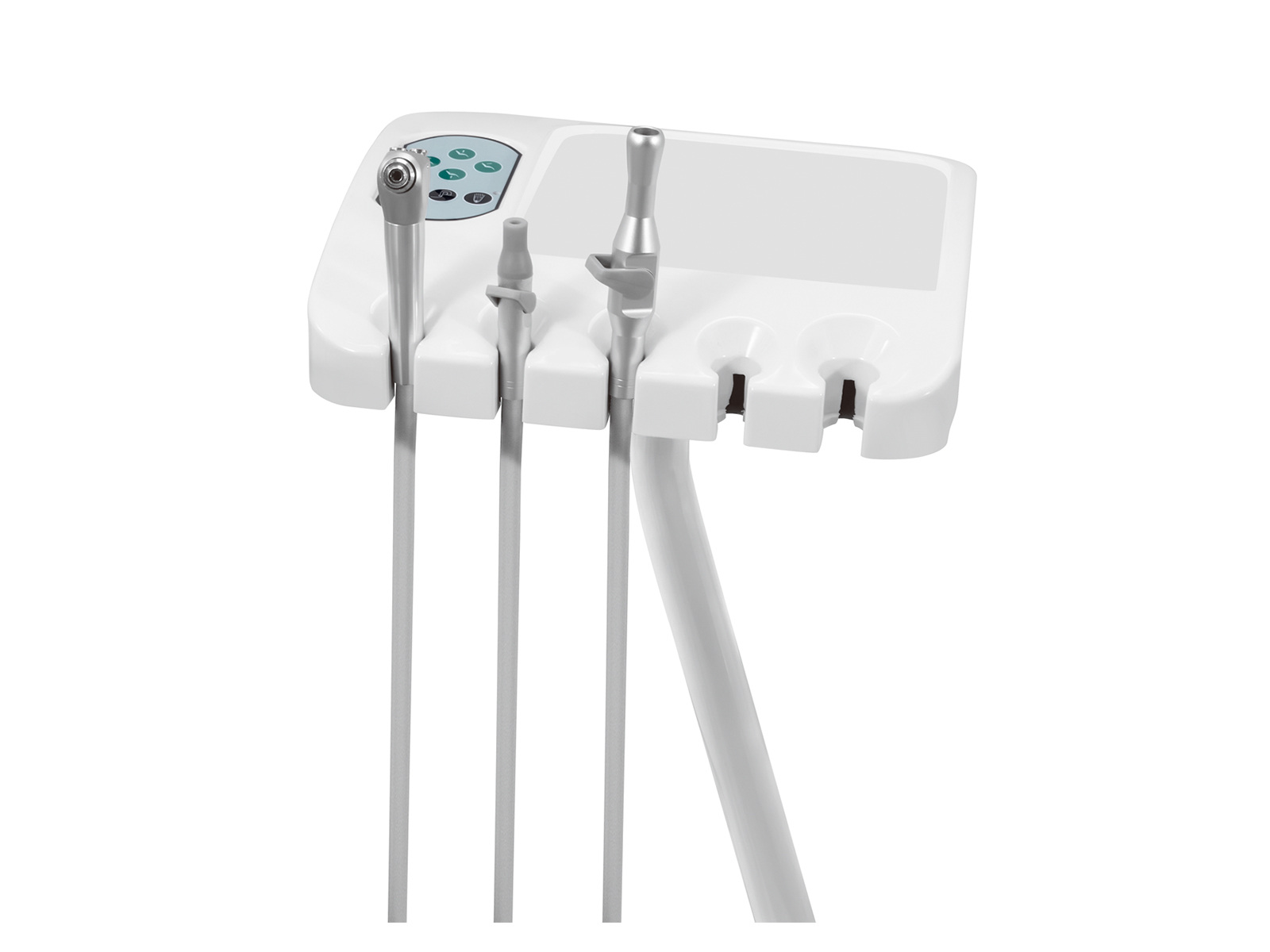
Control interface is one element of operator workflow and treatment-unit usability.
Modern dental units typically provide electronic or integrated controls for chair movement, water functions, instrument operations and other system settings. A good control interface should reduce confusion rather than add complexity.
For busy clinics, repeatable control is particularly valuable. Preset positions, intuitive buttons or touch controls can help staff operate the chair consistently across different treatments and users.
Lighting is directly related to visibility during treatment. A dental operating light should provide stable illumination and allow practical positioning relative to the treatment area. Depending on the design, buyers may also consider brightness control, color temperature options, sensor operation and ease of cleaning.
The right lighting specification depends on clinical use. What matters most is that the light works as part of the overall treatment workflow instead of becoming another object that staff have to adjust awkwardly.
Patients spend a significant amount of time in the dental chair, so comfort is a functional consideration rather than a purely cosmetic one. Upholstery shape, headrest design, chair movement, noise and smoothness of operation all influence the patient experience.
A chair that supports stable, controlled positioning can also help the clinical team maintain a consistent working angle. In this sense, patient comfort and clinician ergonomics can support each other.
A modern dental treatment area needs surfaces and components that can be cleaned as part of normal clinical routines. Buyers should consider the geometry of upholstery, control surfaces, handles and exposed components, as well as the way tubing and accessories are arranged.
The goal is practical maintainability: the equipment should be designed so routine cleaning and inspection can be completed without unnecessary obstacles.
Dental treatment equipment rarely works alone. Depending on the clinic, a treatment unit may need to interface with suction systems, compressors, operating lights, intraoral imaging devices, patient monitors, foot controls and other equipment.
This is one reason it is useful to choose a dental chair manufacturer that understands the broader oral healthcare environment. A chair should leave enough thought and flexibility for the equipment ecosystem around it.
A feature-rich dental chair still needs to be dependable. Buyers should ask how the manufacturer handles component sourcing, assembly, testing, product updates and spare-parts support. Serviceability matters because downtime in a dental clinic has a direct operational cost.
When comparing models, it can be helpful to evaluate not only what the chair can do, but also how easy it is to understand, maintain and support over time.
Yiyuan Medical focuses on dental chairs as a core part of its broader oral healthcare equipment strategy. The product direction is based on the idea that the treatment unit should support the complete workflow around the dentist and patient, rather than simply provide a motorized chair.
For international buyers, this workflow-centered perspective is useful because it shifts the discussion from “How many functions does this model have?” to “Which configuration is appropriate for our clinical environment and target market?”
· Does the chair move smoothly into the positions required by the intended treatments?
· Is the instrument delivery layout appropriate for the dentist and assistant workflow?
· Are controls easy to understand and operate repeatedly?
· Can the operating light be positioned and adjusted practically?
· Does the upholstery and geometry support patient comfort and routine cleaning?
· Can the unit integrate with the clinic’s supporting equipment?
· Is the product backed by clear technical documentation and support?
The most important features depend on the clinical workflow, but common priorities include controlled chair positioning, ergonomic instrument delivery, accessible controls, effective operating light integration, patient comfort, easy-to-clean surfaces and reliable operation.
Not necessarily. A higher-priced unit may include additional functions, but the right choice depends on whether those functions are useful for the intended clinic. Buyers should prioritize workflow fit, reliability and support rather than features that will rarely be used.
A distributor should consider target clinic type, price positioning, configuration flexibility, product differentiation, documentation, spare-parts availability and the consistency of the manufacturer’s production process.
A modern dental chair should be viewed as the operating center of the treatment room. Good design brings together ergonomics, patient positioning, instrument access, lighting, control, hygiene and equipment integration. For buyers, the best product is the one that turns those elements into a dependable clinical workflow.